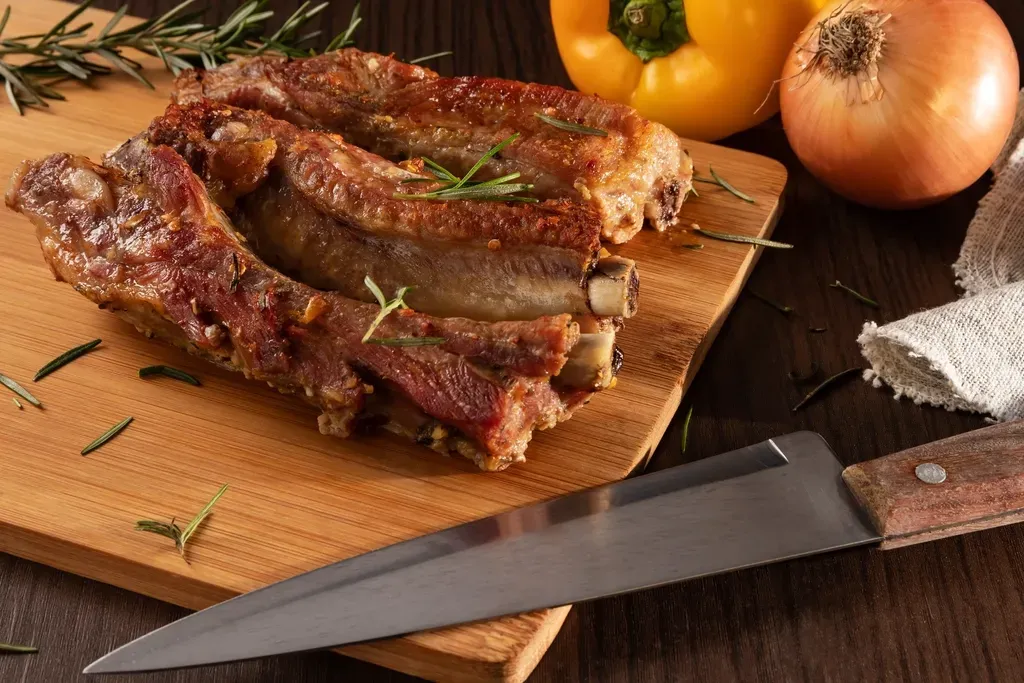
Bone-In Ribs
The hero cut. Matured on a porcine bone scaffold, because we cannot grow bone. The fullest expression of the species.
Bone-In Ribs Available now Deinonychus was a lean, fast, formidably built predator of the Early Cretaceous, roughly 115 million years ago. We selected it as our flagship for reasons that were as much practical as poetic: its lineage sits at a workable distance from living relatives for reconstruction, and it carries none of the cultural freight of the species that headline the films. We wanted a meat, not a mascot.
What we recovered, in flavor terms, is exactly what an active predator's biology predicts: a meat that tastes emphatically of itself.
This is not a meat that hides behind sauce. It rewards high heat, a hard sear, salt, and restraint with everything else. People who use the word "carnivore" as a description of themselves tend to understand it on the first bite.
Deinonychus is produced by the same process as everything we make: a reconstruction of the species' relevant biology, grown as real muscle in serum-free bioreactors, and finished into cuts. For the full pipeline, see Science / How It Works.
The hero cut. Matured on a porcine bone scaffold, because we cannot grow bone. The fullest expression of the species.
Bone-In Ribs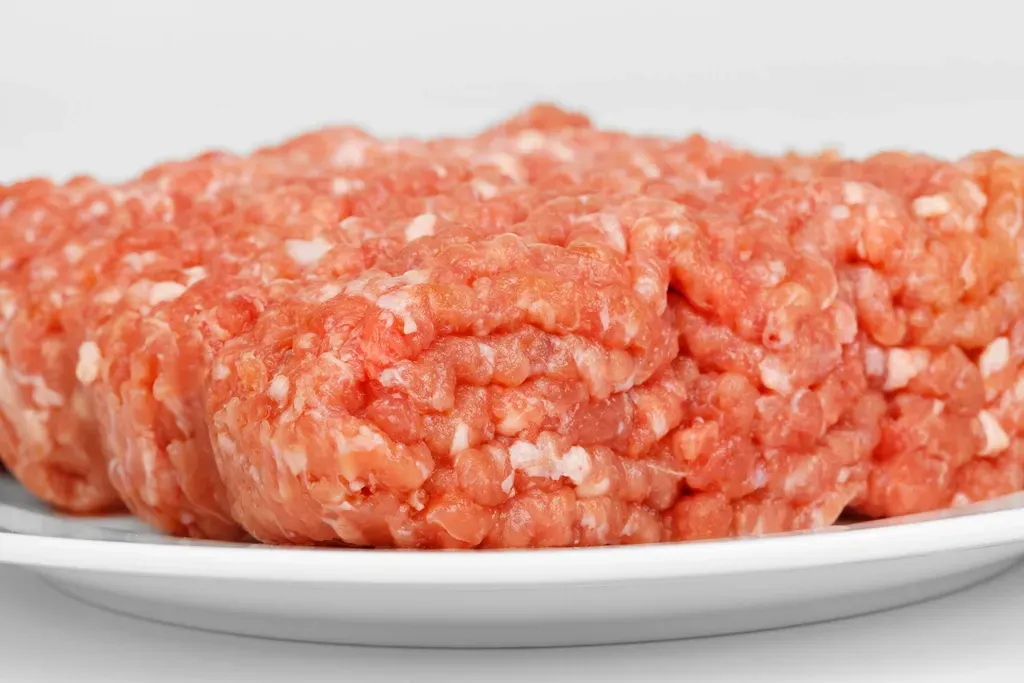
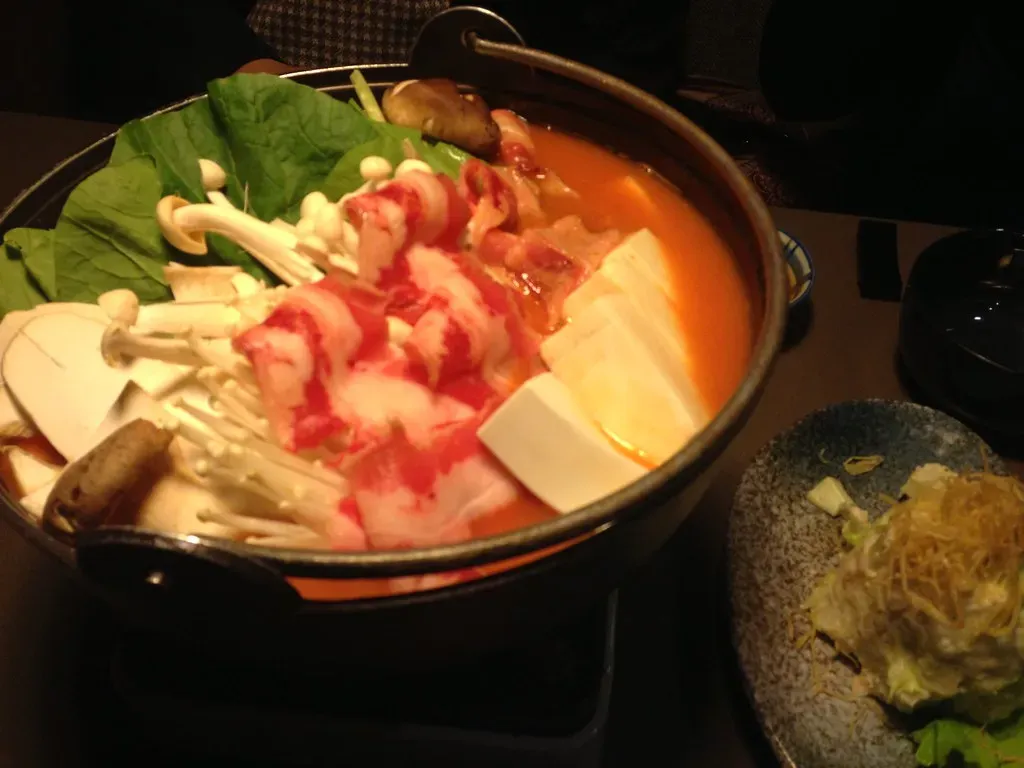
A hot-pot-style blood curd, formulated from recombinant Deinonychus hemoglobin (not bled). One of our most accessible products.
Blood CurdThere is no Deinonychus ribeye. The ribeye is a cut we are developing for our next species, Brachiosaurus.
Bringing the Taste of the Past, Tomorrow.