Deinonychus Bone-In Ribs
Our hero cut. Available now.
 Available now
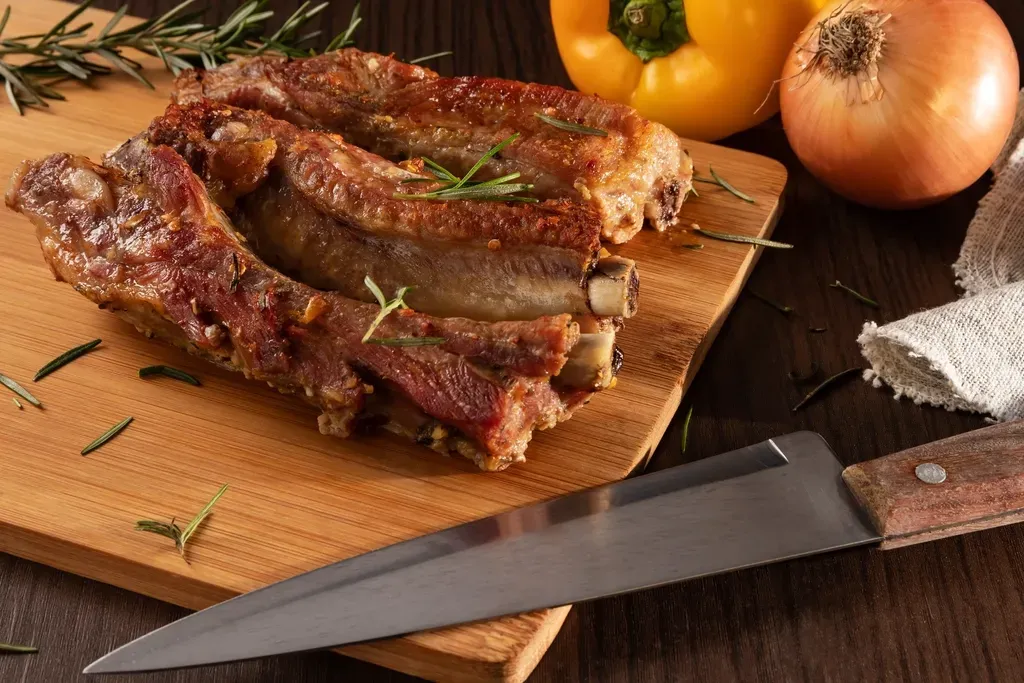
The Bone-In Ribs are the first thing we chose to put in front of the world, and the truest introduction to what Deinonychus is. Lean, dense, and profoundly savory, finished on the bone the way the best conventional ribs always have been.
Why bone-in, and the honest part
We cannot grow bone. No one in cultivated meat can; bone is not muscle, and nothing in the process produces it. Rather than avoid the problem, we built our hero product around it.
Each rib is matured on a porcine bone scaffold — a real pig bone, sourced as a co-product of existing pork production (see Sustainability), that gives the cut its structure, its shape, and the behavior on the grill and the plate that bone-in meat is prized for. The muscle is Deinonychus. The bone is the scaffold that lets it become a rib. We think the candor about that is part of what makes the cut worth trusting.
Scaffold Material Disclosure Porcine bone scaffold present. Bone is scaffold only and is not derived from the cultivated species. Scaffold: porcine bone (food-grade, sourced under our Supplier Code of Conduct). Not suitable for halal or kosher diets. The porcine scaffold may contain alpha-gal; individuals with alpha-gal syndrome should consult their physician.
The experience
- Profile
- bold · lean · umami-rich · intense
- On the bone
- the scaffold carries heat into the cut and gives the meat something to hold to, for the texture and presentation expected of a premium rib
- Best prepared
- a long, low cook and a short, hot finish; salt and little else; rested before serving
From the Culinary Center
"The Deinonychus rib rewards a longer, lower cook. Aggressive high heat accentuates a mineral edge that some panels describe as 'ancient iron.' Some guests ask for exactly that. Most should start low." — Jonas Weidemann, Executive Chef & VP, Culinary
Recommended method: two hours at 275°F (135°C), then a 20-minute finish at 425°F (220°C). Cook to the internal temperature printed on the pack. For optimal texture, rest 8 minutes after reaching target internal temperature.
Storage, labeling, and traceability
- Storage
- Keep frozen at 0°F (−18°C) or below. Thaw under refrigeration and cook within three days of thawing. Do not refreeze; Cretaceous-derived proteins exhibit accelerated drip loss on second freeze-thaw cycles.
- Dates
- Best if used by is 90 days from production, held frozen. A secondary sensory peak window, printed in smaller type beneath it, indicates best sensory performance within 45 days of production when held continuously frozen.
- Lot code
- Every pack carries a lot code in the format
JM-DN-RIB-YYYY-MM-NNN(species, format, year, month, sequence), traceable to its production campaign and scaffold lot. - Release
- Every lot passes food-safety testing and a trained sensory panel before release.
Allergen and dietary statement. This product contains muscle protein from a species with no history of human consumption. Contains porcine bone (scaffold). Packed in a facility that also handles conventional poultry and pork. Allergen statement updated 15 October 2026.
Availability
$395 per pound (raw weight, bone-in).
A fine-dining product, made in limited quantity and priced accordingly. Currently offered through select partner restaurants and a limited direct release; see The Experience and the Newsroom for current availability.
Price reflects current limited allocation. Subject to change with 30 days' notice to existing partners.
Bringing the Taste of the Past, Tomorrow.
The line